Dear Reader, GlobalGadding has no sponsored content, just genuine advice. Some links may be affiliate links at no extra cost to you. See our Disclosure Policy for more information.
We spent one full day in Stavanger and found it an easy city to explore around a fjord trip.
If you are looking for the best things to do in Stavanger, we would focus on the harbour, Gamle Stavanger, Fargegaten, Stavanger Cathedral, the small Printing and Canning Museums, and a Lysefjord cruise if you want to see Preikestolen from the water.
Stavanger is compact enough that you can see a lot without making the day feel rushed.
Across our time in Stavanger, we used one afternoon for the Lysefjord cruise and a separate full day for the city itself, including harbour wandering, small museums, colourful streets and lunch near the waterfront.
We also drove past Sverd i Fjell on the way back to our hotel, although we did not stop properly because of roadworks.
Most visitors do not need a huge list of every possible attraction, especially if you only have a day in Stavanger.
So we are keeping this focused on the city itself, with easy sights, short stops and places you can realistically combine before or after a Lysefjord cruise.
By the end, you should have a clearer idea of what is worth your time, what fits well together, and what you might want to skip if your time in Stavanger is limited.
Quick Answer: What Are The Best Things To Do In Stavanger?
If you only have a short time in Stavanger, we would prioritise Gamle Stavanger, the harbour, Fargegaten and the Printing and Canning Museums.
These are easy to combine on foot and give you a good mix of old streets, waterfront views, colour, local history and relaxed wandering.
If you want something indoors, add the Viking House virtual reality experience or the museums.
If you want the big fjord scenery, add a Lysefjord cruise from Stavanger.
If you have a car and extra time, Sverd i Fjell can be added as a short stop, but we would not put it above the city centre sights.
How We Spent Our Time In Stavanger
We had an afternoon Lysefjord cruise on the day we arrived in Stavanger.
That meant we came into the city, parked up, boarded the boat, and did not get back until early evening.
Our proper city sightseeing happened on a separate full day.
That worked much better than trying to squeeze everything into the same day as the fjord boat trip we took from Stavanger.
With one full day in Stavanger, we had time to visit the Viking House virtual reality experience, wander along the harbour, stop for lunch, see Stavanger Cathedral from the outside, explore Gamle Stavanger, visit the Printing and Canning Museums, and walk around Fargegaten.
We also drove past Sverd i Fjell on the way back to our hotel.
Roadworks meant we could not stop properly, but seeing it from the car was enough for us.
If you only have a few hours before or after a fjord trip, we would not try to do everything.
Focus on the harbour, Gamle Stavanger and Fargegaten first.
Then add the Viking House VR experience or the Printing and Canning Museums if you want an indoor stop.
Sverd i Fjell is better as an extra if you have a car, rather than something we would build the day around.
Best Things To Do In Stavanger
1. Walk Around Stavanger Harbour
Stavanger harbour is one of the easiest places to start, especially if it is your first time in the city.
The centre is compact, so you can experience all of its highlights by foot.
We liked the old colourful harbour warehouses, many of which are now home to restaurants, bars and cafés.
The whole waterfront felt lively, bright and easy to wander.
We walked along both sides of the harbour, which was worth doing because it gave us different views back across the water.

It is not the kind of stop you need to over-plan.
Just give yourself time to wander, look at the buildings, watch the boats and get a feel for the city.
We also wandered through Torget Fish Market, which is right by the harbour.
It was much bigger than we expected, with a wide choice of fresh fish and a deli-style section where you could pick up ready-to-eat seafood, including smoked salmon and shrimps.
It was clean, tidy and, surprisingly, did not have the strong fishy smell we expected.
Even if you are not buying anything, it is worth a quick look as you wander around the waterfront.
We also stopped for lunch nearby, which worked well because we were already close to the waterfront.
If you are taking a Lysefjord cruise from Stavanger, the harbour is a practical place to base yourself before or after the boat trip.
If the cruise and city-centre sights are your main priorities, thinking about where to stay for a more relaxed Norway itinerary may lead you to choose somewhere close to Stavanger harbour rather than a cheaper hotel further out.
2. Try The Viking House VR Experience
The Viking House VR experience was one of the most unexpectedly fun things we did in Stavanger.
It is a small visitor centre that uses virtual reality to tell the story of the Viking Age in the Stavanger region.
The film is called The First King and is based on the sagas of Harald Fairhair and the Battle of Hafrsfjord in 872.
You sit in a Viking ship-style seat, put on the VR headset, and watch the story unfold around you in 360 degrees.

The film itself lasts around 15 minutes, but our visit took about 20 minutes once the lady in costume had introduced the experience.
We didn’t book ahead, we just walked in, and there was a slot available about 5 minutes later.
There were only the three of us in our session, which made it feel relaxed and easy.
We paid 145 NOK per adult when we visited.
It would suit families and children, especially if you want something short, indoor and different from just wandering the streets.
Out of the three of us, only one of us felt a little disorientated, but that was likely because of existing vertigo rather than the experience itself.
Even with that, we still really enjoyed it.
If you want a quick rainy-day activity in Stavanger, or something fun before heading back outside, Viking House is worth considering.
An indoor stop like this can also be useful when researching what to expect from Norway in different travel seasons, as even a summer sightseeing day may include rain.
3. See Stavanger Cathedral
Stavanger Cathedral is only a short walk from the harbour, so it is easy to include while exploring the city centre.
It is one of Stavanger’s most important historic buildings and has been in continuous use for centuries.
The cathedral is also closely tied to Stavanger’s history, with parts of the building dating back to the Middle Ages.
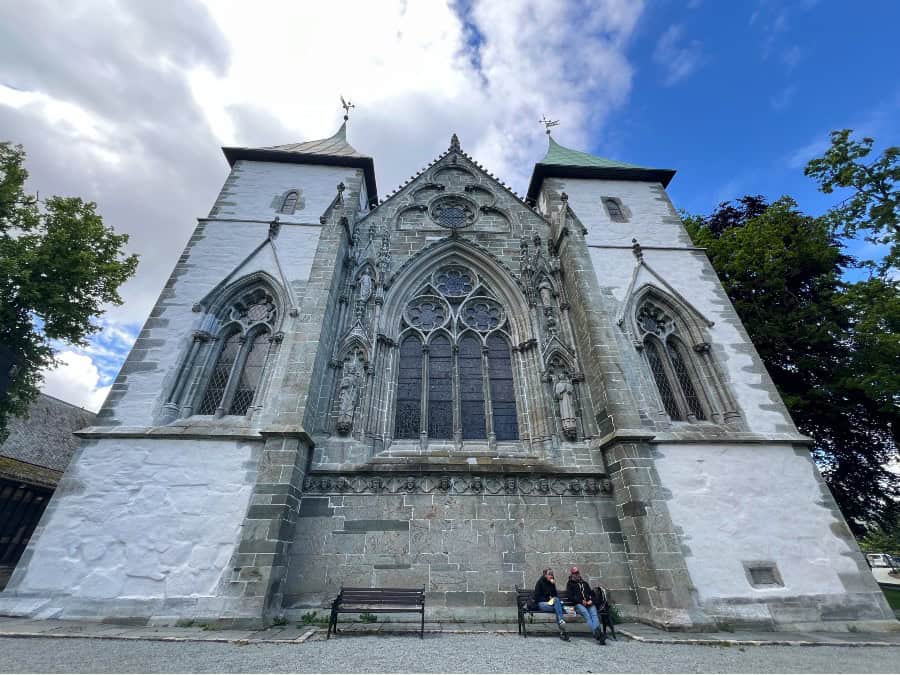
Unfortunately, we could not go inside when we visited because there was a wedding taking place.
That is worth knowing before you go, because the cathedral can close to visitors for services and events.
Even from the outside, it was still worth stopping by.
The exterior is beautiful, and the architecture gives the area a real sense of history compared with the busier harbour streets nearby.
We also had the bonus of seeing a lovely old car parked outside when we visited, which made the stop feel even more memorable.
If the cathedral is open when you are in Stavanger, it is worth taking a look inside.
But even if you only see it from the outside, it is still an easy and worthwhile stop as part of a walk around the city centre.
Before visiting, check the official Stavanger Cathedral opening times, as the church can close for weddings, services, rehearsals and other events
4. Wander Through Gamle Stavanger
Gamle Stavanger was one of our favourite areas to wander in the city.
It is the old wooden-house district, with 173 white-washed wooden buildings set along cobbled streets.
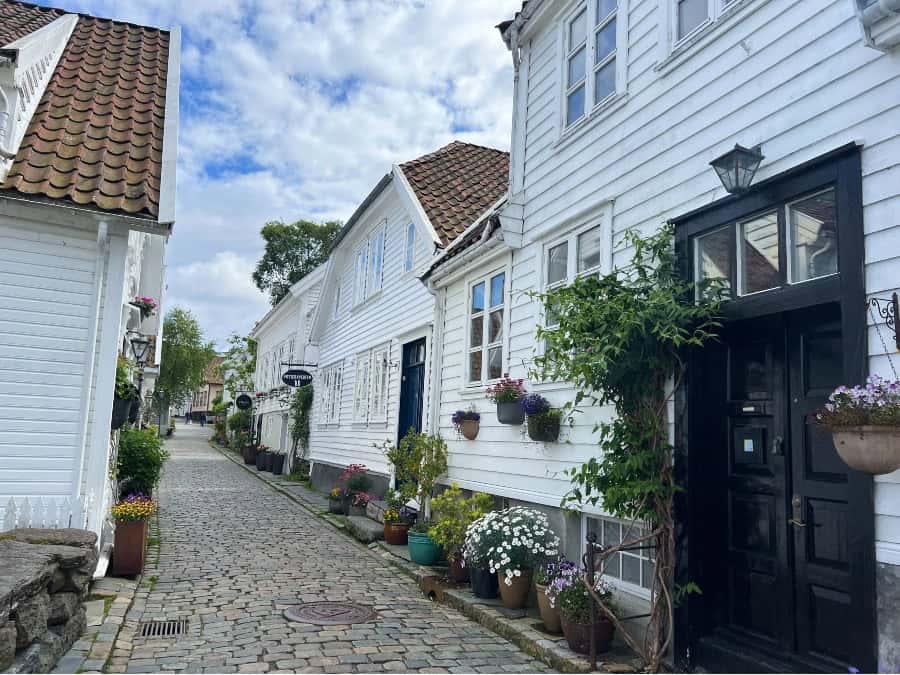
The houses are immaculately kept, with window boxes spilling over with flowers and quiet lanes that feel a world away from the busier harbour.
Most of the houses are residential, so it is important to be respectful as you walk around.
That said, it still feels welcoming rather than closed off, with resident cats, pretty corners and plenty of photo opportunities.
We also saw the occasional café with a few chairs outside, along with some arts and handicraft shops and galleries.
The best way to experience Gamle Stavanger is simply to wander slowly, look down the side streets and enjoy the details.
This is one of the best free things to do in Stavanger, especially if you enjoy slow wandering, pretty streets and photo stops rather than paid attractions.
It is also close to IDDIS, the Norwegian Printing and Canning Museum, so the two work well together if you are exploring Stavanger on foot.
Stavanger also fits well into a balanced Norway route with cities and fjords, giving you an easy sightseeing day between longer stretches of driving and scenery.
For us, Gamle Stavanger was not just a quick photo stop.
It was one of the most peaceful and charming parts of the city centre.
5. Visit IDDIS: The Norwegian Printing And Canning Museums
IDDIS, the Norwegian Printing and Canning Museums, was more interesting than we expected.
The museums sit in the heart of Gamle Stavanger, so they are easy to add while you are already wandering the old wooden streets.
The Canning Museum is housed in an old cannery and tells the story of Stavanger’s sardine industry.
That might sound niche, but it is a big part of the city’s history.
Stavanger was once home to more than half of Norway’s canning factories, and the museum takes you through the process from fish to finished tin.
Inside, you can see:
- old canning machinery
- sardine-can displays
- the different stages of the canning process
- workers’ history
- a restored workers’ cottage next door
The exhibits explain enough to make the story interesting without making it feel overwhelming.
We especially liked seeing how the fish went from salting and threading to smoking, cutting and packing.
The restored workers’ cottage helped connect the industry to the lives of the people who worked there, rather than just showing machines and labels.
The Printing Museum sits alongside the Canning Museum because the two industries were closely linked.
Stavanger’s canning industry needed colourful labels and packaging, which helped the city’s printing industry grow.
This part of the museum includes:
- old printing presses
- bookbinding displays
- hands-on exhibits
- step-by-step activities
We even made a simple little booklet and got to take it away with us.
It was easy to follow, quick to do, and made the museum feel more memorable.
Because the museums are indoors, compact and close to Gamle Stavanger, they are also one of the better rainy-day things to do in Stavanger.
Paid attractions like this are also worth factoring into the everyday expenses of travelling through Norway, especially when you are combining museums, meals and a fjord cruise in the same city stop.
IDDIS is a good choice if you want a compact attraction in Stavanger, especially if you enjoy local history told through everyday working life.
Check the official IDDIS visitor information before you go for current opening hours, exhibitions and practical details.
6. Explore Fargegaten
Fargegaten, also known as Øvre Holmegate, is Stavanger’s colourful street.
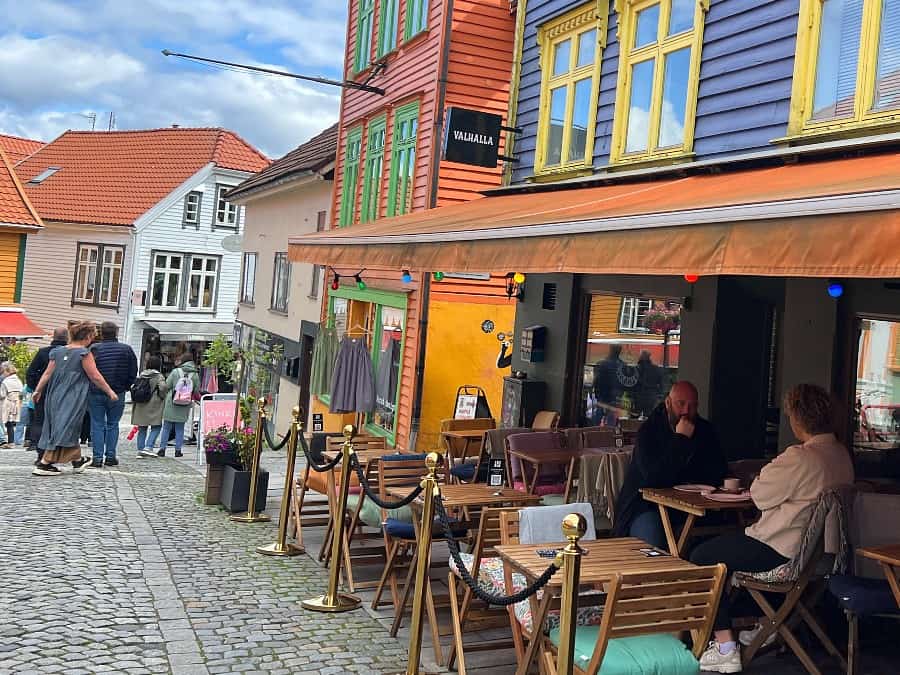
It is one of the most photographed places in the city, with brightly painted buildings, cafés, bars and small shops.
It is free to wander, so it is easy to add while you are exploring central Stavanger on foot.
The street used to be much quieter, but it was transformed with a bold colour scheme and is now one of Stavanger’s best-known tourist spots.
We liked seeing it, but we would treat it as a wander rather than a major sightseeing stop.
It was quite busy when we visited, probably because there was a cruise ship in port.
The main street is colourful and fun for photos, but it can feel touristy.
Our tip would be to wander beyond the main drag too, as some of the nearby side streets had colourful houses but felt much quieter when we visited.
Fargegaten is a good stop if you want photos, coffee, drinks, shopping or somewhere lively to wander.
But unless you are planning to sit in one of the cafés or bars, you probably do not need a huge amount of time here.
Working out how many days make sense for a first Norway route will help you decide whether Stavanger deserves a full sightseeing day or works better as a shorter stop around your fjord plans.
7. Build In Time For Lunch Or Coffee Around The Harbour
Stavanger is not a cheap place to eat, but it is worth planning a proper pause into your day.
We stopped for lunch at Hotel Victoria, close to the harbour.
It was expensive, but the food was really tasty, the service was friendly, and the views made it feel worth the cost.
If you are exploring Stavanger on foot, the harbour area works well for lunch or coffee because it keeps you close to the main sights.
You can wander Gamle Stavanger, the cathedral area, Fargegaten and the waterfront without having to break the day up with a long detour.
This is also useful if you are taking a Lysefjord cruise from Stavanger.
Eating near the harbour means you can stay close to the boat departure area and avoid rushing across the city afterwards.
We would not say you need to eat at Hotel Victoria specifically.
But we would definitely choose somewhere central, especially if your time in Stavanger is limited.
Allowing for food prices, opening times and where your cruise departs is all part of the groundwork for a smooth Norway trip, especially when you are trying to fit Stavanger into a tightly planned day.

8. Take A Lysefjord Cruise From Stavanger
A Lysefjord cruise is one of the easiest ways to add fjord scenery to a Stavanger visit.
The boats leave from the waterfront, so it is simple to combine the cruise with time in the city.
We took an afternoon Lysefjord cruise on the day we arrived in Stavanger, then explored the city properly on a separate full day.
On our cruise, we saw:
- fjordside homes
- Vagabond’s Cave
- mountain goats
- Preikestolen from below
- Hengjanefossen waterfall
A cruise is not the same as hiking Preikestolen.
You do not get the famous view from the top, but you do get an easy way to see Pulpit Rock and Lysefjord from the water.
Some trips combine a Lysefjord cruise with the Preikestolen hike, so check carefully whether you are booking a cruise-only trip, a hike-only trip, or a combined fjord and hiking tour.
For us, the cruise worked well because we wanted fjord views without organising hiking transport, trail timings or a full day around the walk.
9. See Sverd I Fjell If You Have A Car
Sverd i Fjell, or the Three Swords, is one of Stavanger’s best-known landmarks.
The monument commemorates the Battle of Hafrsfjord in 872, when Harald Fairhair is traditionally said to have united Norway into one kingdom.
It sits outside the main city centre, so it is not as easy to include as the harbour, Gamle Stavanger or Fargegaten.
We drove past Sverd i Fjell on the way back to our hotel, but we could not stop properly because of roadworks and limited stopping options.
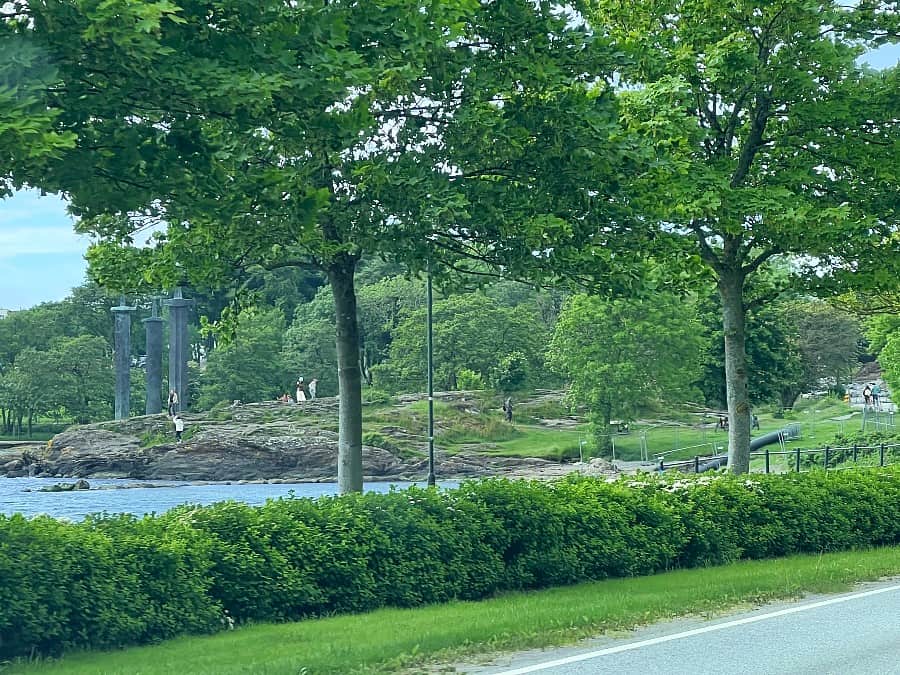
To be honest, seeing it from the car was enough for us.
The monument is striking, and it may be worth a short stop if you have a car, are already nearby, or are especially interested in Viking history.
But if you only have limited time in Stavanger, we would prioritise the compact city centre sights first.
If you plan to add sights outside Stavanger, tips for navigating Norway with confidence can also help with city traffic, unfamiliar roads and deciding whether a short driving detour is worthwhile.
Planning A Fjord Trip From Stavanger
Stavanger is easy to enjoy without overcomplicating your day.
For us, it worked well as both a city break and a base for seeing Lysefjord from the water.
Thinking about how to connect fjords, cities and scenic roads in Norway will help you decide whether Stavanger needs a full sightseeing day, a cruise day of its own or a shorter stop before continuing north.
If you are still deciding whether to add a boat trip, our Lysefjord cruise review explains what the journey is actually like, what you see along the route and whether we thought it was worth it.

Meet Angela
Angela is the founder and writer of GlobalGadding, a travel resource for road-trip lovers and independent travellers.
She’s explored 40+ countries, and road tripped across New Zealand, Alaska, Australia, Canada, UK, Sri Lanka, USA, Namibia, and Europe.
She creates detailed, easy-to-follow itineraries that take the stress out of planning. Her mission is to help readers craft their own self-drive trips.