Dear Reader, GlobalGadding has no sponsored content, just genuine advice. Some links may be affiliate links at no extra cost to you. See our Disclosure Policy for more information.
If you are looking for the best things to do in Oslo, the hardest part is not finding options.
It is deciding what is actually worth your time.
Oslo has museums, waterfront walks, modern architecture, parks, saunas, ferries, food stops and easy day-to-day city exploring.
But if this is your first visit, you probably do not need a list of 40 Oslo attractions.
You need to know which places are worth prioritising, which ones are easy to combine, which are free, and which might not be a must-see for you.
We spent 3 days in Oslo at the start of our Norway road trip and used that time to explore the waterfront, Bjørvika, MUNCH, Akershus Fortress, Bygdøy, Vigeland Sculpture Park, the Royal Palace area and several central sights.
Some places surprised us.
Some were better than expected.
And a few famous Oslo attractions reminded us that a “must-see” sight is not always a must-see for everyone.
So this is our realistic guide to what to do in Oslo on a first visit, based on what we actually saw, what we would prioritise again, and what we would treat as optional depending on your interests.
Quick Answer: What Are The Best Things To Do In Oslo?
For a first visit, we would prioritise:
- Best free thing to do: Walk on the roof of Oslo Opera House
- Best modern Oslo stop: Deichman Bjørvika Library
- Best historic sight: Akershus Fortress
- Best museum: Fram Museum
- Best waterfront area: Bjørvika and the harbour
- Best park: Vigeland Sculpture Park
- Best easy city walk: Royal Palace to Karl Johans gate
- Best unusual thing to do: Floating saunas or The Viking Planet
- Best rainy day option: Bygdøy museums
- Best honest skip-or-not: MUNCH, unless you love Edvard Munch or modern art
Oslo is compact, but we would not try to do everything in one trip. Pick the sights that match your interests and build your route around those.
Best Things To Do In Oslo For First-Time Visitors
1. Walk On The Roof Of Oslo Opera House
If you only do one free thing in Oslo, make it the Opera House roof.
Oslo Opera House is the home of the Norwegian National Opera and Ballet, but most first-time visitors come for the building itself.
It is easy, memorable, completely free, and gives you one of the best first impressions of the city.
Oslo Opera House sits right on the waterfront in Bjørvika, just a short walk from Oslo Central Station.
You do not need a ticket to enjoy it from the outside, and you do not need to go inside for a performance to make it worth visiting.
The best part is walking up the sloping white marble roof.
It feels slightly odd at first, because you are literally walking on top of the building, but that is what makes it fun.
From the roof, you get views across the Oslofjord, Bjørvika, MUNCH, the floating saunas, the waterfront sculptures and the city skyline.

For first-time visitors, this is one of the easiest Oslo attractions to add to your route because it does not involve booking, queues, public transport or entry fees.
It also works well with several other things to do near Oslo waterfront, including Deichman Bjørvika Library, MUNCH, the harbour saunas and a walk towards Akershus Fortress.
We visited on our first day in Oslo, after walking from our apartment towards the waterfront.
It was a simple stop, but one of those places that instantly helped us understand Oslo’s mix of modern architecture, water and outdoor city life.
Good to know: The roof is sloped and exposed, so take care if it is wet, icy or windy.
Best for: free views, modern architecture, first impressions of Oslo
Allow: 30 to 45 minutes
Cost: free
How to get there: Walk from Oslo Central Station in around 5 to 10 minutes.
Worth it? Yes, especially on a first visit
2. Visit Deichman Bjørvika Library
Deichman Bjørvika is Oslo’s main public library, but it feels more like a modern civic space than a traditional library.
It is one of the easiest free things to do in Oslo, especially if you are already visiting the Opera House.
It sits just behind the waterfront, close to Oslo Central Station, and is much more interesting than “visit a library” probably sounds.
The building is the reason to go.
It is spread over 6 floors, with dramatic angles, open spaces, reading areas, workspaces and views that make you keep looking up as you move through it.

We liked that it felt like a real local space, not just a visitor attraction.
People were reading, working, meeting friends and using the building properly, which gave us a glimpse of everyday Oslo as well as the city’s modern architecture.
For first-time visitors, Deichman works well because it is free, central, easy to combine with Bjørvika and useful in mixed weather.
It is also a good option if you want something calm between bigger Oslo attractions.
We would not travel across the whole city just for it, but if you are already near the Opera House, MUNCH or the waterfront, it is absolutely worth popping in.
Good to know: It is a working public library, so it is worth being respectful and keeping the noise down as you wander.
Best for: free architecture, rainy days, Bjørvika exploring
Allow: 15 to 20 minutes
Cost: free
How to get there: Walk from Oslo Central Station or Oslo Opera House in a few minutes.
Worth it? Yes, if you are already in the area
3. Visit MUNCH If You Love Art
MUNCH is Oslo’s dedicated museum for Edvard Munch, Norway’s most famous artist and the painter behind The Scream.
The museum holds the world’s largest collection of his work, along with exhibitions exploring his life, ideas and influence.
It is one of the biggest Oslo attractions and is hard to miss if you are walking around Bjørvika.
The tall waterfront building sits close to Oslo Opera House, Deichman Bjørvika Library and the floating saunas, so it is easy to add if you are already exploring this part of the city.
For us, MUNCH was not a highlight.
We only visited because entry was included with our Oslo Pass, and although we were glad to see it for ourselves, Edvard Munch’s work did not really connect with us.
Even The Scream did not have the impact we expected.
That does not mean you should skip it.
If you love Edvard Munch, modern art or big-name museums, MUNCH may be one of the best things to do in Oslo for you.
But if art museums are not usually your thing, we would not treat it as essential just because it appears on so many Oslo must-see lists.
The parts we enjoyed most were the views over Oslo from the top floor and the coffee and apple cake in the lobby café.
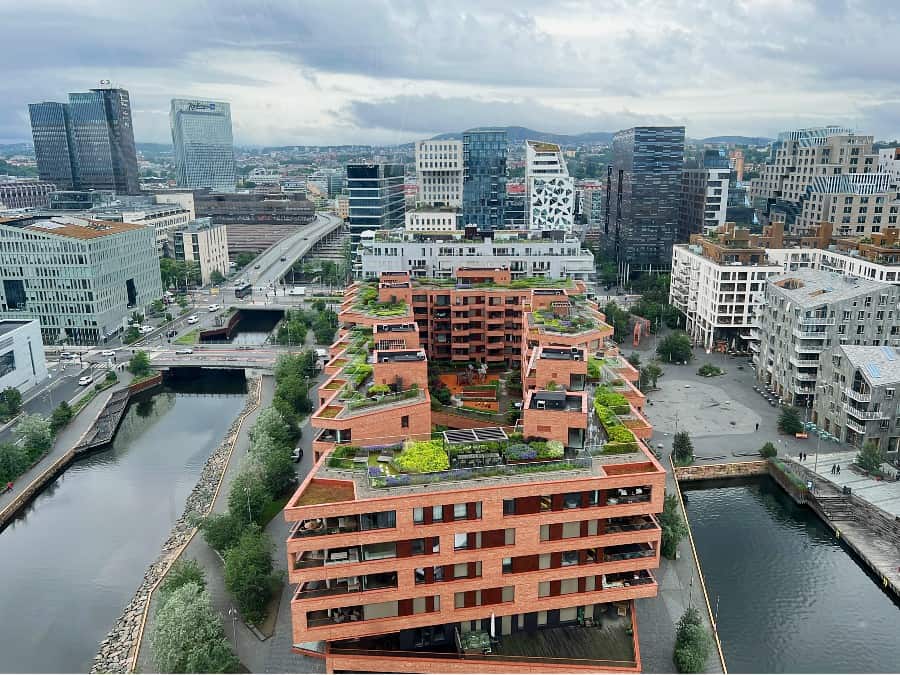
MUNCH is also one of the attractions worth including when you work out whether the Oslo Pass is worth it, particularly if you are grouping several paid museums into the same day.
So for us, MUNCH was useful to include as part of an Oslo Pass day, but not somewhere we would rush back to.
Good to know: MUNCH works best if you are genuinely interested in Edvard Munch or modern art, rather than just ticking off a famous name.
Best for: art lovers, Munch fans, rainy days, Bjørvika exploring
Allow: 1 to 1.5 hours
Cost: paid entry, unless included with your Oslo Pass
How to get there: MUNCH is on the Bjørvika waterfront, a short walk from Oslo Opera House and Deichman Bjørvika Library.
Worth it? Yes for art lovers, optional for everyone else
4. Walk Around Akershus Fortress
Akershus Fortress is one of the best free things to do in Oslo if you want history, harbour views and an easy outdoor stop.
It is a medieval fortress and castle complex overlooking Oslo’s waterfront, with stone walls, gates, bastions, open grounds and views across the Oslofjord.
Akershus has guarded Oslo since the late 1200s and has been used as a royal residence, military stronghold and defensive fortress over the centuries.
You can visit some of the museums and buildings inside the complex, but you do not need to go inside to make it worth your time.
We only walked around the fortress grounds, and that was enough for us on a first visit.
It gave us a completely different side of Oslo after the modern buildings around Bjørvika.
One minute you are looking at the Opera House and MUNCH, and not long afterwards you are walking through old stone gateways and quiet fortress paths above the harbour.
For first-time visitors, Akershus works well because it is central, free to explore outdoors and easy to combine with the waterfront, Aker Brygge, Oslo City Hall or a harbour walk.
Its central location is also a useful reminder that deciding where to stay between Norway’s major sights can make city sightseeing much easier before the road-trip part of your holiday begins.
It is also a good choice if you want one of the more historic places to visit in Oslo without committing to another full museum.
We spent just under an hour wandering through the grounds, looking at the walls, towers, gates and views.
It felt peaceful rather than crowded, and we liked that you could enjoy it at your own pace.
Good to know: The fortress grounds are uneven in places, with slopes, cobbles and steps, so wear comfortable shoes.
Best for: history, harbour views, free sightseeing, a slower wander
Allow: 45 minutes to 1 hour
Cost: free to walk around the grounds
How to get there: Walk from the waterfront, Aker Brygge, City Hall or Karl Johans gate.
Worth it? Yes, especially if you want a historic stop without paying for another museum
5. Take The Ferry To Bygdøy For Oslo’s Best Museum Cluster
If you want to visit some of Oslo’s best museums, Bygdøy is where to go.
This leafy peninsula across the water from central Oslo is home to several major museums, including the Fram Museum, Kon-Tiki Museum, Norwegian Maritime Museum and Norwegian Museum of Cultural History.
The famous Viking Ship Museum is also on Bygdøy, but it is currently closed for renovation until 2027, when it is due to reopen as part of the new Museum of the Viking Age. You can check the latest reopening information on VisitOSLO before planning your Bygdøy museum day.
It is not just the museums that make it worth considering.
Getting there by ferry gives you views back towards Oslo’s waterfront, and once you arrive, the area feels greener, quieter and more spread out than the city centre.
We took the Bygdøy ferry from Rådhusbrygga, near City Hall and Aker Brygge.
The ferry was included with our Oslo Pass, but you can also pay separately if you are not using the pass.
If you are paying separately, it is worth understanding what to expect from Norway travel costs, because ferry tickets, museum admissions and a café stop can make this one of the more expensive Oslo sightseeing days.
Even though it was transport, it felt like part of the day rather than just a way to get from A to B.

The boat had old wooden seats, and we really enjoyed seeing Oslo from the water.
Once we arrived on Bygdøy, we visited the Norwegian Maritime Museum, Fram Museum and Kon-Tiki Museum.
That worked well because the museums are close together, but 3 museums in a row was still tiring.
If you only have time or energy for one museum on Bygdøy, we would choose the Fram Museum.
Norwegian Maritime Museum
The Norwegian Maritime Museum explores Norway’s relationship with the sea, from traditional boat-building to coastal life, shipping and maritime history.
For us, the most memorable part was the KLINK boat-building workshop.
We watched for around 10 minutes as a craftsman used traditional techniques to build a replica boat, which made the museum feel more alive than just walking past displays.
This museum is a good fit if you are interested in boats, coastal culture, craftsmanship or Norway’s long connection with the sea.
It is also useful in wet weather, especially because there is a café inside.
Fram Museum
The Fram Museum was our favourite museum on Bygdøy.
It is built around the original polar ship Fram, which was used during Norway’s Arctic and Antarctic exploration era.
The big draw is that you can actually step aboard the ship, walk around the decks and go below to see where the explorers lived and worked.
That made it feel much more immersive than a standard museum.
There are also exhibits about polar exploration, Nansen, Amundsen, the Northwest Passage and the extreme conditions these expeditions faced.
If you only choose one Bygdøy museum, we would choose the Fram Museum.
It was engaging, memorable and easy to enjoy, even after already visiting other museums that day.
Kon-Tiki Museum
The Kon-Tiki Museum focuses on Thor Heyerdahl’s expeditions, including the famous 1947 Pacific crossing on the Kon-Tiki raft.
Inside, you can see the original Kon-Tiki raft, along with Ra II and exhibits about Heyerdahl’s other expeditions.
It felt different from the Maritime Museum and Fram Museum, which helped keep the day interesting.
We spent about an hour here, which felt about right.
This museum is a good fit if you like exploration stories, unusual journeys, original vessels and slightly quirky real-life adventures.
It would also work well for families, especially if children enjoy boats, expeditions and interactive displays.
Good to know: Bygdøy is best if you enjoy museums, want a ferry ride, or need a good rainy-day plan in Oslo. The ferry is part of the appeal when it is running, but check current routes before building your day around it.
Best for: museums, ferry views, rainy days, Oslo Pass value
Allow: half a day if visiting 2 or 3 museums
Cost: ferry and museum costs vary, unless covered by the Oslo Pass
How to get there: Take the Bygdøy ferry from Rådhusbrygga near City Hall and Aker Brygge, or use public transport if the ferry is not running.
Worth it? Yes, especially if you visit the Fram Museum
6. Walk Around Vigeland Sculpture Park
Vigeland Sculpture Park is one of the most unusual things to do in Oslo, and it is completely free to visit.
It sits inside Frogner Park and contains more than 200 sculptures by Norwegian artist Gustav Vigeland.
The sculptures are mostly nude human figures, shown in every kind of pose, age and emotion.
You will see children, parents, couples, older people, bodies twisted together, people wrestling, holding, climbing, comforting, struggling and reacting to each other.
Some sculptures feel tender or playful.
Others are much more intense and exaggerated.
This is not a pretty little park with a few decorative statues.
It is bold, physical and sometimes quite bizarre, which is exactly why it is memorable, but also why it will not be everyone’s cup of tea.
The main route takes you across the Bridge, past the famous Angry Boy statue, towards the Fountain, the Monolith and the Wheel of Life.

The Monolith is the most striking part of the park.
It rises 17 metres high and is carved from one block of granite, with human figures twisted together from bottom to top.
You do not need to understand every sculpture to enjoy the park.
In fact, none of the sculptures have titles or explanations, so part of the experience is simply looking, reacting and deciding what you think.
We were glad we visited, but we would not describe Vigeland Sculpture Park as an absolute must-see for everyone.
If you like unusual public art, sculpture, symbolism or free outdoor sights, it is one of the best things to do in Oslo.
Outdoor places such as Vigeland Sculpture Park are also worth considering when choosing the right time to visit depending on your trip style, particularly if parks, city walks and spending time outside matter more to you than museums.
If you prefer pretty viewpoints, classic architecture or museums with clear explanations, you may find it more strange than beautiful.
We also stopped at Anne på Landet café inside the park, which made the visit feel more relaxed.
The lemon meringue was sweet and delicious, and it was a good place to pause before continuing our walk back towards central Oslo.
Good to know: Vigeland Sculpture Park is free to enter, but the toilets cost 20 NOK when we visited.
Best for: unusual things to do in Oslo, free sightseeing, sculpture, parks
Allow: 1.5 to 2 hours, especially if you stop at the café
Cost: free entry
How to get there: Take Tram 12 towards Majorstuen and get off at Vigelandsparken, then walk around 5 minutes to the gates.
Worth it? Yes, if you like unusual outdoor sights. Not essential for everyone.
7. See The Royal Palace And Walk Through Slottsparken
The Royal Palace is one of the easiest central Oslo sights to add to a first visit, especially if you are already walking around Karl Johans gate.
It is the official residence of the Norwegian monarch, but it does not feel showy or over-the-top in the way some European palaces do.
That was actually what made it interesting for us.
The building is simple, restrained and very Nordic, sitting at the top of Karl Johans gate with gardens and parkland around it.

You are not coming here for Versailles-style drama.
You are coming for the setting, the calm, the open parkland and the chance to see one of Norway’s most important civic landmarks without needing to pay for a tour.
If you want to see more than the outside, guided tours of the Royal Palace are available at certain times of year.
We did not take a tour, so we only saw the palace from the outside and walked through Slottsparken, which still felt worth doing as part of a central Oslo walk.
Slottsparken felt peaceful and green, and it made a lovely contrast to the busier streets around Karl Johans gate.
We missed the Changing of the Guard, but we did see a guard on duty.
If that is something you particularly want to watch, the ceremony usually takes place at 1.30 pm, so arrive a little earlier for a better view.
For first-time visitors, this is a good stop if you want an easy city walk, a bit of royal history and a quieter green space without going out of your way.
It also fits easily into what a ten-day Norway trip could look like, with a couple of slower Oslo days before the road-trip section begins.
It also works well as part of a walking route from Vigeland Sculpture Park, through Briskeby, to the Royal Palace and then down Karl Johans gate.
Good to know: The Royal Palace works well as a free outdoor stop, but check the official website before your visit if you want to book a guided tour inside.
Best for: palace views, gardens, easy city walking, classic Oslo landmarks
Allow: 30 to 60 minutes
Cost: free to see from outside and walk through the park
How to get there: Walk from Karl Johans gate, National Theatre or through Slottsparken. You can also combine it with a walk from Vigeland Sculpture Park via Briskeby.
Worth it? Yes, as an easy central stop, but do not expect a grand, ornate palace experience.
8. Walk Down Karl Johans Gate
Karl Johans gate is Oslo’s main street, running from the Royal Palace towards Oslo Central Station.
For first-time visitors, it is one of the easiest ways to connect several central Oslo attractions without needing a separate plan.
This is not the most unusual thing to do in Oslo, but it is useful.
As you walk down Karl Johans gate, you pass a mix of shops, cafés, parks, historic buildings and civic landmarks, including the National Theatre, the original University of Oslo buildings, Stortinget and Oslo Cathedral nearby.
It gives you a more classic city-centre side of Oslo after the waterfront, museums and parks.
We walked down Karl Johans gate after visiting the Royal Palace and Slottsparken.
It worked well because the route naturally took us from the palace area back towards the centre, with several easy stops along the way.
This is also a good area if you want lunch, coffee or a break from sightseeing.
We stopped at Grand Café, which was not cheap, but the food was flavoursome and the staff were warm and helpful.
If you are short on time, you do not need to walk every inch of Karl Johans gate.
If Oslo is only the starting point for a shorter Norway route for first-time visitors, Karl Johans gate is an easy way to see several central landmarks without using too much of your sightseeing time.
But if you are already near the Royal Palace, National Theatre or Stortinget, it makes sense to use it as a sightseeing route rather than just a shopping street.
Good to know: Karl Johans gate can feel busier and more commercial than other parts of Oslo, but it is still a useful first-time visitor route because so many central sights sit along or near it.
Best for: easy city walking, central landmarks, cafés, classic Oslo sights
Allow: 30 to 45 minutes, longer if you stop for food or coffee
Cost: free
How to get there: Start at the Royal Palace and walk downhill towards Oslo Central Station, or begin near Oslo Central Station and walk up towards the palace.
Worth it? Yes, as a practical central Oslo walk, especially when combined with the Royal Palace, National Theatre, Stortinget and Oslo Cathedral.
9. See Stortinget And Oslo Cathedral
If you are walking along Karl Johans gate, it is worth adding Stortinget and Oslo Cathedral as easy central stops.
They are not places we would cross the whole city for on their own, but they work well as part of a first-time Oslo walk.
Stortinget is Norway’s parliament building, and you will pass it naturally if you are walking between the Royal Palace, Karl Johans gate and Oslo Central Station.
The building has a distinctive yellow brick façade and a curved central section, which makes it stand out from the surrounding streets.
We did not take a guided tour.
We just admired it from the outside as part of our walk, which felt enough for us.
Oslo Cathedral is also close by and is free to visit.
From the outside, it is easy to miss if you are not looking for it, but inside it feels peaceful, understated and welcoming.
The interior is not huge or overwhelming, but there are enough details, artwork and quiet corners to make it worth a short stop.
For first-time visitors, this pair works best as part of a central Oslo route rather than as major stand-alone attractions.

They help give the city centre a bit more context between the shops, cafés and bigger sights.
Good to know: Oslo Cathedral is free to enter, but opening times can vary if services or events are taking place.
Best for: central landmarks, free sightseeing, short city stops
Allow: 20 to 30 minutes for both
Cost: free to view Stortinget from outside and free to visit Oslo Cathedral
How to get there: Both are close to Karl Johans gate and easy to include when walking between the Royal Palace and Oslo Central Station.
Worth it? Yes, if you are already nearby. Treat them as easy add-ons, not headline Oslo attractions.
10. Pop Into Oslo City Hall
Oslo City Hall is one of those places that is easy to overlook, but worth popping into if you are nearby.
It is the large red-brick building close to the harbour, Aker Brygge and Rådhusbrygga, where the Bygdøy ferry departs.
From the outside, it is quite a distinctive landmark, with 2 square towers and a solid, civic feel.
Inside, the main reason to visit is the artwork.

The walls are covered with large murals and decorative details showing scenes from Norwegian history, working life, politics and society.
It is also where the Nobel Peace Prize ceremony takes place each year, which gives the building a bit more significance than you might expect from a city hall.
We went in because we were passing, and that is exactly how we would recommend treating it.
There was a security check before entering, then we spent around 15 to 20 minutes wandering around inside.
It was worth seeing, but we would not build a whole Oslo route around it.
For first-time visitors, Oslo City Hall works best as a short free stop between the waterfront, Aker Brygge, The Viking Planet or the Bygdøy ferry.
If Oslo is the starting point for a longer first-time self-drive itinerary for Norway, City Hall is an easy attraction to include without taking too much time away from the rest of the route.
It is useful if you want something quick, central and indoors without committing to another museum.
Good to know: Entry is free, but there may be a security check before you go inside.
Best for: free sightseeing, murals, short indoor stop, central Oslo wandering
Allow: 15 to 20 minutes
Cost: free
How to get there: Walk from Aker Brygge, Rådhusbrygga, Karl Johans gate or the harbour area.
Worth it? Yes, if you are nearby. Not a must-see, but a good quick stop.
11. Try The Viking Planet For A Digital Viking Experience
The Viking Planet is a digital Viking museum close to Oslo City Hall and Aker Brygge.
It is not the same as seeing real Viking ships or artefacts, so it is worth being clear about what you are getting before you go.
Instead of traditional museum displays, The Viking Planet uses films, VR, holograms, interactive screens and digital reconstructions to tell stories from the Viking era.
We visited because it was included with our Oslo Pass and because we wanted to compare it with other Viking-related experiences in Norway.
The main part we enjoyed was The Ambush, a 12-minute VR film that puts you on a Viking longboat during a raid.
There are also immersive films, digital ship displays, a Viking timeline and selfie stations where you can dress up and take photos.
It is quite dark inside, which adds to the atmosphere, although it may not suit everyone.
For us, it was fun and different rather than essential.
Without the Oslo Pass, the adult ticket price felt quite steep, so we would mainly recommend it if you are interested in Viking history, visiting with children, or want a quick indoor activity near the harbour.
It is also worth considering while the Viking Ship Museum is closed, especially if you want some kind of Viking-themed stop during your Oslo trip.
Changing museum openings are part of the practical side of organising a Norway holiday, so check the latest information before deciding which Viking attraction to include.
Good to know: This is a digital museum experience, not a traditional Viking artefact museum.
Best for: unusual things to do in Oslo, Viking history, families, rainy days
Allow: around 1 hour
Cost: paid entry, unless included with your Oslo Pass
How to get there: Walk from Oslo City Hall, Aker Brygge, Rådhusbrygga or Karl Johans gate.
Worth it? Worth considering with the Oslo Pass, but pricey as a standalone stop.
12. Try A Floating Sauna On The Oslo Waterfront
Floating saunas are one of the more unusual things to do in Oslo, especially if you want to experience the city the way locals use the fjord.
You will see them along the waterfront around Bjørvika and Langkaia, close to the Opera House, MUNCH and the harbour area.
The idea is simple: you book a sauna session, warm up inside, then cool off with a dip in the Oslofjord.
We did not try a sauna ourselves, but we saw plenty of people using them, including people jumping straight into the water from KOK Oslo Badstue at Langkaia.
We also saw Oslo Badstuforening near the Opera House side of the waterfront.
Even just watching from the outside gave us a sense of how much Oslo’s waterfront is part of everyday city life, not just somewhere visitors walk around taking photos.
This is not something every first-time visitor will want to do.
But if you like saunas, cold-water dips or experiences that feel a bit more local, it could be one of the most memorable things to do in Oslo.
Experiences like this are easier to include once you have decided what kind of Norway trip fits the time you have, rather than trying to squeeze them into a brief arrival or departure day.
It also works well if you are already spending time around Bjørvika, the Opera House, MUNCH or the waterfront.
We would book ahead rather than expecting to turn up and get a space, especially in summer, at weekends or if you want a particular time.
Good to know: We saw the floating saunas but did not use them ourselves, so check current prices, booking rules and what to bring before you go.
Best for: unusual things to do in Oslo, sauna lovers, local-feeling experiences, waterfront views
Allow: around 1 to 2 hours, depending on your booking
Cost: paid experience
How to get there: Walk along the Bjørvika waterfront near Oslo Opera House, MUNCH and Langkaia.
Worth it? Worth considering if you want something more memorable than another museum.
13. Visit The Nobel Peace Center
The Nobel Peace Center is one of the more thought-provoking places to visit in Oslo.
It tells the story of Alfred Nobel, the Nobel Peace Prize and the people and organisations who have received the prize over the years.
This is not a huge museum, but it feels different from many of Oslo’s other attractions.
Instead of ships, sculpture or architecture, the focus is on peace, conflict, democracy, activism and people who have tried to change the world.
We visited after returning from Bygdøy and were glad we added it.
The part that stayed with us most was Nobel’s Field, where you can learn about Peace Prize laureates surrounded by soft lights.
It felt like we got to “meet” everyone, which made the experience more personal than we expected.
There were also exhibitions about Alfred Nobel, the history of the Peace Prize and current global issues.
It is a good fit if you want something central, indoor and meaningful, especially if you like museums that make you think rather than simply show you objects.
It was not included in our Oslo Pass when we visited, so we paid separately.
Even so, it ended up being one of the more memorable stops of our Oslo trip.
Good to know: Exhibition themes can change, so check the official Nobel Peace Center exhibitions before deciding whether it suits your visit.
Best for: thoughtful museums, rainy days, history, current affairs
Allow: 1 to 1.5 hours
Cost: paid entry
How to get there: The Nobel Peace Center is near City Hall, Aker Brygge and Rådhusbrygga, so it is easy to combine with the harbour area or Bygdøy ferry.
Worth it? Yes, if you want a meaningful indoor stop that feels different from Oslo’s art and maritime museums.
14. Walk Around Bjørvika And The Oslo Waterfront
One of the easiest things to do in Oslo is simply walk the waterfront around Bjørvika.
This is where modern Oslo feels most obvious, with the Opera House, Deichman Bjørvika Library, MUNCH, floating saunas, sculptures, cafés, apartment buildings and fjord views all close together.
If you are visiting Oslo for the first time, this is a good area to start because you can see a lot without needing public transport or a complicated plan.
You can walk on the Opera House roof, look across to MUNCH, watch people using the floating saunas, spot the waterfront sculptures and follow the harbour paths towards Akershus Fortress or Aker Brygge.
It is not just about one attraction.
The appeal is the whole area: the water, the architecture, the open spaces and the way locals seem to use the fjord as part of everyday city life.

We liked this part of Oslo because it felt very different from the older, more traditional parts of the city.
It gave us that mix of modern architecture, public spaces and water that makes Oslo feel quite different from other European capitals.
This is also a useful area for food and coffee stops.
We had coffee and pastries at Godt Brød Munch Brygge, and we also walked towards Vippetangen for lunch by the harbour.
If you only have a short time in Oslo, a waterfront walk around Bjørvika gives you a strong first impression without costing anything.
Good to know: This area is exposed, so it can feel windy or cold by the water even when the rest of the city feels comfortable.
Best for: waterfront views, modern Oslo, free sightseeing, easy walking
Allow: 1 to 2 hours, longer if you stop for food, coffee or a sauna
Cost: free, unless you add food, drinks or a sauna booking
How to get there: Start near Oslo Central Station, Oslo Opera House or MUNCH and follow the waterfront paths.
Worth it? Yes. This is one of the best areas to explore on a first visit to Oslo.
Other Popular Things To Do In Oslo We Did Not Have Time For
We did not try to cover every Oslo attraction during our 3 days in the city.
There are other popular things to do in Oslo, including Grünerløkka, Mathallen, Holmenkollen, the National Museum, Sognsvann Lake and proper Oslofjord island-hopping.
We would treat these as swaps rather than extras.
If one of them matters more to you than museums, sculpture parks or the waterfront, build it into your route by removing something else rather than trying to squeeze it on top.
| If You Want | Consider Swapping In |
|---|---|
| Food halls and neighbourhood wandering | Grünerløkka and Mathallen |
| More nature and views | Sognsvann Lake or Holmenkollen |
| More art | The National Museum |
| More fjord time | Oslofjord islands |
| Fewer museums | Swap out MUNCH or one Bygdøy museum |
How To Choose What To Do In Oslo
The best things to do in Oslo depend less on what is “must-see” and more on how much time you have, what kind of trip you enjoy, and how much energy you want to spend on museums.
If Oslo sits at the start or end of a longer journey, deciding where to base yourself on a Norway driving trip can also help you choose whether to stay centrally, use public transport and collect the rental car after your sightseeing days.
Oslo is easy to explore, but you still need to make choices. The same principle applies when choosing the easiest way to build a Norway road trip, because adding more stops is not always better if it leaves the holiday feeling rushed.
If you only have a short visit, we would not try to squeeze in everything. Pick one main area or theme for each day, then build around that.
If you only have a few hours:
Focus on the Opera House, Deichman Bjørvika, the waterfront and Akershus Fortress.
If you have one full day:
Choose between a waterfront and fortress day, or a museum-heavy day using the Oslo Pass.
If you have 2 days:
Spend one day around the waterfront and central sights, then use the second day for Bygdøy, the Fram Museum and the Nobel Peace Center.
If you have 3 days:
Add Vigeland Sculpture Park, the Royal Palace, Karl Johans gate and a few slower stops so the trip does not feel rushed.
If the weather is poor:
Prioritise museums, Deichman Bjørvika, The Viking Planet, the Nobel Peace Center or Oslo City Hall.
If you want to keep costs down:
Choose more free sights, such as the Opera House roof, Deichman Bjørvika, Akershus Fortress, Vigeland Sculpture Park, Slottsparken and the waterfront.
If you do not like museums:
Do not force yourself through several of them just because they appear on every Oslo list. Oslo also works well for walking, architecture, parks, harbour views and relaxed city wandering.
The main thing we learned is that Oslo is better when you do less, but choose well.
A realistic route will give you a much better first visit than trying to tick off every famous attraction.
Before using trams, buses, ferries or the metro, check routes, zones and current ticket options on the official Ruter website.

FAQs About Things To Do In Oslo
What Should You Not Miss In Oslo?
For a first visit, we would not miss the Opera House roof, Deichman Bjørvika, Akershus Fortress, the waterfront and at least one museum that genuinely interests you.
For us, the Fram Museum was the standout museum.
What Are The Best Free Things To Do In Oslo?
The best free things to do in Oslo include walking on the Opera House roof, visiting Deichman Bjørvika, wandering around Akershus Fortress, exploring the waterfront, walking through Slottsparken and visiting Vigeland Sculpture Park.
Is Oslo Good For A First-Time Visit?
Yes, Oslo is a good city for a first-time visit because it is easy to explore, walkable in the centre and has a good mix of museums, waterfront sights, parks, architecture and short ferry trips.
It is not the most instantly dramatic city in Norway, but it is still worth including.
Can You See Oslo Without A Car?
Yes, you do not need a car in Oslo.
Walking, trams, buses, ferries and the metro are much easier for sightseeing. We had a car because Oslo was the start of our Norway road trip, but we did not need it for the city itself.
How Many Days Do You Need In Oslo?
We think 3 days in Oslo is a good amount of time for a first visit.
You can see the main waterfront sights, visit a few museums, explore Vigeland Sculpture Park and add central landmarks without rushing every stop.
Planning Your Oslo Itinerary
Once you know which Oslo sights interest you most, the next step is working out how to fit them together.
The city is easy to explore, but museums, ferries, parks and waterfront sights still need grouping properly if you do not want to waste time crossing back and forth.
Our 3 days in Oslo itinerary shows how we combined the waterfront, Bygdøy museums, Vigeland Sculpture Park, the Royal Palace area and the main central sights without making each day feel overloaded.

Meet Angela
Angela is the founder and writer of GlobalGadding, a travel resource for road-trip lovers and independent travellers.
She’s explored 40+ countries, and road tripped across New Zealand, Alaska, Australia, Canada, UK, Sri Lanka, USA, Namibia, and Europe.
She creates detailed, easy-to-follow itineraries that take the stress out of planning. Her mission is to help readers craft their own self-drive trips.