Dear Reader, GlobalGadding has no sponsored content, just genuine advice. Some links may be affiliate links at no extra cost to you. See our Disclosure Policy for more information.
A 14 day Norway itinerary sounds like plenty of time, until you start looking at the map.
Norway is huge, the driving distances can be long, and the best parts of a road trip are not always the places with the biggest names.
If you try to include Oslo, Stavanger, Bergen, Flåm, Geiranger, Ålesund, Trondheim, the Atlantic Ocean Road, several fjords, every famous hike and all the scenic viewpoints in 2 weeks, the trip can quickly turn into a race.
This itinerary takes a more realistic approach.
It is a 14 day Norway road trip starting and ending in Oslo, with a route that includes city time, fjord scenery, waterfalls, mountain roads, glaciers, Bergen, Stavanger and Geiranger, without trying to cover the whole country.
We spent 3 weeks road tripping through Norway, so this 2 week route is not everything we did.
Instead, it is the version we would suggest if you want a strong first Norway road trip, but you still want the days to feel manageable.
You will still need to move around, and some drives are long.
But the aim is to give you a route that feels exciting without being completely exhausting.
By the end, you should have a clearer idea of where to go, how the route fits together, where to stay overnight, and what to leave for a longer Norway trip.
Quick Answer: How Should You Spend 14 Days In Norway?
For a first Norway road trip, we would use 14 days to focus on southern and western Norway rather than trying to cover the whole country.
This route starts and ends in Oslo, then loops through Stavanger, Hardanger, Bergen, Flåm, Lærdal, the glacier region around Loen or Olden, and Geiranger before returning towards Oslo.
It gives you a good mix of:
- Oslo city sights
- Stavanger and Lysefjord
- waterfalls and scenic roads
- Bergen
- Flåm and classic fjord scenery
- fjord villages
- glaciers
- Geirangerfjord
- mountain roads
- a realistic Oslo-to-Oslo loop
We would not try to include Trondheim, Ålesund, the Atlantic Ocean Road and northern Norway in the same 14-day itinerary.
They are worth visiting, but adding them here would make the route feel too rushed for most first-time visitors.
If you want a slower trip with more detours, extra cities and more scenic driving days, 3 weeks in Norway is a much better fit.
14-Day Norway Itinerary At A Glance
This is a simple overview of the route. Each day below explains how we would pace the journey without trying to cover too much. Because this route is designed as a road trip, it is worth comparing car hire prices before you fix your dates, especially if you are travelling in summer.

Route At A Glance
- Days 1–2: Oslo
- Days 3–4: Stavanger and Lysefjord
- Day 5: Hardanger / Tyssedal
- Days 6–7: Bergen
- Day 8: Flåm / Lærdal area
- Days 9-10: Loen or Olden
- Day 11: Geiranger
- Day 12: Lillehammer area
- Day 13: Oslo
- Day 14: Oslo/Airport
This map shows the main overnight areas for this 14-day Norway road trip loop, starting and ending in Oslo.


Day 1: Arrive In Oslo And Start With The Waterfront
Arrive at Oslo Gardermoen Airport and head into Oslo city centre.
If you arrive before midday, as we did, you should still have time for an easy first walk once you have checked in and dropped your bags.
We would keep Day 1 simple.
Start around Bjørvika, Oslo Opera House, Deichman Library and the waterfront, because everything is close together and you do not need timed tickets or complicated transport.

These are also a good starting point when deciding what to prioritise on a first trip to Oslo without making your arrival day too busy.
If you still have energy, continue towards Akershus Fortress or Aker Brygge.
If not, stop for coffee, pick up food and save your energy for the road trip ahead.
You do not need a car for Oslo sightseeing, so only collect your rental car on Day 1 if it makes your wider plans easier.
Overnight: Oslo
Driving: None needed in the city
Main focus: Arrival, Bjørvika and Oslo waterfront
Worth knowing: If you arrive later, choose the Opera House and waterfront rather than trying to do too much
Day 2: Explore Oslo Before The Road Trip Begins
Use your second day for Oslo sightseeing before the driving days begin.
We would keep this day car-free and focus on the parts of Oslo that are easiest to reach on foot or by public transport.
When deciding how to structure a first trip to Oslo, it helps to choose either a slower parks and city-centre day or a museum-focused day rather than trying to cover everything.
You could visit Vigeland Sculpture Park, walk around the Royal Palace and Slottsparken, explore Karl Johans gate, or use the day for museums if that suits your interests.
If you want to see several paid attractions, this can also be a good day to consider the Oslo Pass.
We used a 24-hour Oslo Pass during our own Oslo stay for a museum-heavy day, but it only makes sense if the attractions and transport you will actually use cost more than the pass itself.
For a first visit, we would not try to see all of Oslo in 1 day.
Choose either a slower parks and city-centre day, or a museum-focused day, then save your energy for the road trip ahead.
Overnight: Oslo
Driving: None needed in the city
Main focus: Oslo sights, parks or museums
Worth knowing: Keep the car parked or collect it after your Oslo stay, because public transport and walking are easier for city sightseeing
Day 3: Drive From Oslo To Stavanger
Collect your rental car and start the drive from Oslo towards Stavanger.
Before confirming the booking, the things we’d check before booking a car in Norway include the vehicle size, luggage space, transmission, insurance and any extra charges.
This is one of the longest driving days in the itinerary, so we would not plan lots of sightseeing around it.
The aim is simply to get from eastern Norway to the Stavanger area, ready for Lysefjord the next day.
You can break up the journey with coffee stops, supermarket stops or a short wander somewhere along the route, but we would keep the day flexible.
If you arrive in Stavanger with time and energy, have an easy walk around the harbour or Gamle Stavanger.
If not, check in, get food and call it a night.
Overnight: Stavanger
Driving: Approx. 7.5 to 8.5 hours / 550 km, plus stops
Main focus: Long travel day from Oslo to Stavanger
Worth knowing: Start early and avoid planning a full sightseeing day at either end
Day 4: Explore Stavanger And Lysefjord
Use Day 4 for Stavanger and Lysefjord.
If you want an active day, this is the point in the itinerary to hike Preikestolen.
If you prefer an easier fjord experience, take a Lysefjord cruise from Stavanger instead.
We chose the cruise, which worked well as a relaxed way to see Lysefjord, Preikestolen from below, Vagabond’s Cave, mountain goats and Hengjanefossen waterfall without needing a big hike.

Knowing what to expect from a Lysefjord trip by boat can help you decide whether the cruise or the hike suits you better.
Leave some time before or after your fjord trip to wander around Stavanger harbour, Gamle Stavanger and the colourful streets around Fargegaten.
Do not try to combine a full Preikestolen hike, a cruise and all of Stavanger in 1 day.
Choose the fjord experience that suits you best, then keep the rest of the day easy.
Overnight: Stavanger
Driving: Minimal if staying in Stavanger, or approx. 45 minutes each way for Preikestolen parking
Main focus: Lysefjord, Preikestolen or Stavanger city sights
Worth knowing: Choose either the hike or the cruise unless you are happy with a very full day
Day 5: Drive The Scenic Route From Stavanger To Hardanger
Leave Stavanger and take the scenic route towards Hardanger. You can check the official Norwegian Scenic Route Ryfylke page before travelling, especially if you want to understand which parts of Route 13 are included and whether any seasonal road notes apply.
We followed Route 13 for part of this drive, including the short Hjelmeland to Nesvik ferry, and this was the day when the Norway road trip really started to feel properly scenic.

It was also a good example of how ferry travel fits into a Norway road trip, because the crossing simply formed part of the route rather than feeling like a separate activity.
Instead of treating the drive as a simple transfer, use it for fjord views, quieter roads, waterfall stops and short viewpoints.
Possible stops along this route include Erfjorden, Suldalsporten viewpoint, Flesefossen, Hyttehaugen viewpoint and Odda before continuing to Tyssedal.
You do not need to stop everywhere.
Choose 2 or 3 places that fit your timing, leave space for the ferry crossing and photo stops, then stay around Tyssedal, Odda or another practical Hardanger base.
Overnight: Tyssedal, Odda or Hardanger area
Driving: Approx. 5 to 6.5 hours / 300 to 350 km, plus stops and the Hjelmeland to Nesvik ferry
Main focus: Scenic Route 13, fjord roads, waterfalls and viewpoints
Worth knowing: This is a scenic driving day, so do not overpack it. The route is more memorable if you leave time for ferries, viewpoints and unplanned photo stops
Day 6: Drive From Hardanger To Bergen
Leave Tyssedal, Odda or your Hardanger base and drive towards Bergen.
This is another scenic driving day, so do not rush straight to the city if you have time for stops along the way.
Understanding the reality of driving between fjords and mountain roads helps when estimating how many waterfalls and viewpoints will comfortably fit into the day.
From this area, you can build in some of Hardanger’s best waterfall stops, such as Vøringsfossen, Skjervsfossen and Steinsdalsfossen.
We would choose a few key stops rather than trying to see every waterfall on the route.
Vøringsfossen is the big-name stop, while Steinsdalsfossen is a fun one because you can walk behind the waterfall if the path is open.
If you arrive in Bergen with time left, keep the evening easy.
Check in, park the car, get your bearings and save proper sightseeing for tomorrow.
Overnight: Bergen
Driving: Approx. 4.5 to 6 hours / 250 to 300 km, plus waterfall stops
Main focus: Hardanger waterfalls and arriving in Bergen
Worth knowing: This day can easily stretch if you stop often, so choose your waterfalls before you set off
Day 7: Spend 1 Full Day In Bergen
Use Day 7 as your main Bergen sightseeing day.
We would keep the car parked and explore the city on foot or by public transport.
For a first visit, the main experiences to include in Bergen are Bryggen, the Fløibanen funicular, Mount Fløyen, Bergenhus Fortress, St Mary’s Church, the Fish Market and the harbour.
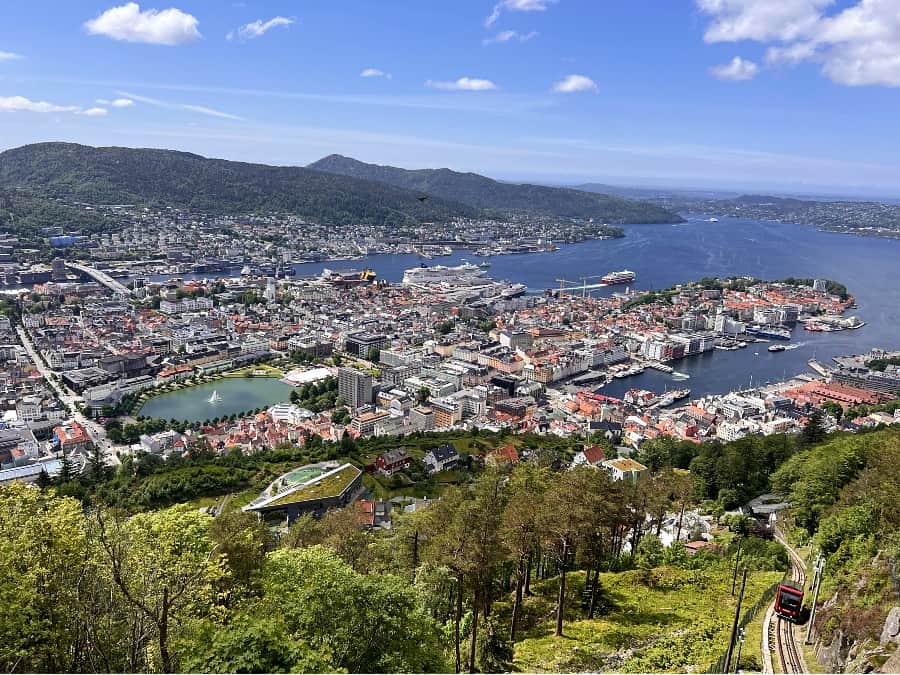
If you enjoy art or need a rainy-day option, KODE is a good extra stop.
If the weather is clear, we would prioritise Mount Fløyen over trying to squeeze in too many museums.
Bergen is an easy city to overfill, so do not try to add every mountain, museum and fjord trip in 1 day.
Choose the main sights, leave time to wander, and enjoy a slower city day before the route continues north.
Overnight: Bergen
Driving: None needed in the city
Main focus: Bryggen, Fløibanen, Mount Fløyen and Bergen harbour
Worth knowing: Check the weather before paying for viewpoints. On a clear day, Mount Fløyen is one of the best things to prioritise
Day 8: Drive From Bergen To Flåm And Lærdal
Leave Bergen and drive towards the Flåm and Lærdal area.
This is one of the most scenic fjord days in the itinerary, so it is worth starting early and keeping your timing realistic.
On the way, you can stop near Stalheim for views over Nærøydalen before continuing towards Gudvangen and Flåm.
Choosing the ideal time of year for fjords and long daylight can make a real difference to how comfortably the drive, stops and booked activities fit into the day.
If you want to include a fjord cruise or the Flåm Railway, this is the day to do it, but book ahead and do not overfill the route.
We would treat Flåm as the main focus rather than trying to add too many extra stops.
After your fjord or railway experience, continue towards Lærdal or Aurland for the night.
Overnight: Lærdal, Aurland or Flåm area
Driving: Approx. 3.5 to 4.5 hours / 220 to 260 km, plus stops and any booked activities
Main focus: Stalheim, Gudvangen, Flåm, fjord scenery and the Flåm Railway
Worth knowing: If you want to do both a fjord cruise and the Flåm Railway, book times carefully and leave enough space between them
Day 9: Drive From Flåm Or Lærdal To Loen Or Olden
Leave the Flåm, Aurland or Lærdal area and continue towards Loen or Olden.
This is a scenic driving day rather than a big sightseeing day, so keep your plans flexible.
Depending on where you stayed, you could add Stegastein, the Lærdal Tunnel, Borgund Stave Church or a stop around Fjærland and the glacier area on the way.
We would not try to do everything.
Choose 1 or 2 stops that fit your route, then focus on getting to Loen or Olden at a sensible time.
This area makes a good base for Briksdalsbreen, Kjenndal Glacier, Loen, Olden and some of the most dramatic fjord and mountain scenery in this part of Norway.
Overnight: Loen or Olden
Driving: Approx. 4.5 to 6 hours / 250 to 330 km, depending on route and stops
Main focus: Scenic drive towards glacier country
Worth knowing: This is a good day to choose fewer stops and arrive before evening, especially if you want time around the fjord
Day 10: Visit Briksdalsbreen Or Kjenndal Glacier
Use Day 10 as your glacier day around Loen and Olden.
This is the day to visit Briksdalsbreen, Kjenndal Glacier, or both if you are happy with a fuller day.
We visited both on our Norway road trip, but for most first-time visitors, Briksdalsbreen is the easier one to prioritise.

It has better facilities, a clear walking route, the option of the Troll Car, and a dramatic approach past waterfalls and mountain scenery.
Kjenndal Glacier feels quieter and more remote, but it works best if you have a car, enough time and decent weather.
When deciding between Briksdalsbreen and Kjenndal on a road trip, the main things to compare are the driving involved, facilities, walking and how much time you have.
If you want something different, you could swap one glacier stop for Loen Skylift, a fjord walk or a slower day around Olden and Loen.
Overnight: Loen or Olden
Driving: Approx. 1 to 3 hours total, depending on which glacier stops you choose
Main focus: Briksdalsbreen, Kjenndal Glacier or Loen scenery
Worth knowing: Briksdalsbreen is the easier first-choice glacier stop. Kjenndal is quieter, but more weather-dependent
Day 11: Travel From Loen Or Olden To Geiranger
Leave Loen or Olden and make your way towards Geiranger.
This is a day where the route matters as much as the destination, so do not treat it as a quick transfer.
If it works with your timing, one of the best ways to arrive is by taking the Hellesylt to Geiranger ferry. Before fixing your Geiranger day, check the current Hellesylt to Geiranger ferry times and booking options, as this scenic crossing can shape the whole day.
The ferry gives you classic Geirangerfjord scenery from the water, including steep cliffs, waterfalls and old mountain farms.

Once you arrive, it helps to decide whether Geiranger fits a first Norway route based on the time you have, the weather and how many viewpoints or activities you want to include.
Keep the rest of the day simple.
Walk around the waterfront, visit a viewpoint if the weather is clear, or drive up towards Dalsnibba if conditions are good and you have enough time.
If the weather is poor, save the paid viewpoint and enjoy the village, fjord and lower viewpoints instead.
Overnight: Geiranger
Driving: Approx. 2 to 3.5 hours, plus ferry time if travelling via Hellesylt
Main focus: Geirangerfjord, ferry scenery and viewpoints
Worth knowing: Pre-book the Hellesylt to Geiranger ferry in busy months, and check the weather before paying for high viewpoints
Day 12: Leave Geiranger And Start The Return Drive South
Leave Geiranger and start working your way back towards Oslo.
This is a driving day, but it can still be scenic if you keep the route steady rather than rushing.
If the weather is clear and you did not do it yesterday, you could start with one final viewpoint around Geiranger before leaving the fjord behind.
After that, continue towards Lom, Otta, Gudbrandsdalen or the Lillehammer area, depending on how far you want to drive.
We would not try to add another major sightseeing day here.
The aim is to enjoy the mountain and valley scenery, break up the journey, and stay somewhere practical before returning to Oslo.
Overnight: Lillehammer area, Otta or Gudbrandsdalen
Driving: Approx. 5 to 6.5 hours / 300 to 380 km, depending on route and stops
Main focus: Leaving Geiranger and starting the return loop south
Worth knowing: Choose this overnight stop for driving flow, not because it needs to be a major destination
Day 13: Drive Back To Oslo
Use Day 13 to drive back to Oslo and finish the road trip loop.
If you stayed around Lillehammer, Otta or Gudbrandsdalen, this should feel much more manageable than trying to drive all the way back from Geiranger in 1 go.
We would keep this day simple.
You can stop for coffee, lunch or a short wander along the way, but we would not plan a packed sightseeing route.
It is also worth allowing for the road-trip expenses beyond car rental in Norway, particularly any final tolls, fuel and parking before you return the car.
Once you reach Oslo, return the rental car if that works with your plans, check in and enjoy a relaxed final evening in the city.
This is a good point to have dinner out, walk along the waterfront again or simply slow down before travelling home.
Overnight: Oslo
Driving: Approx. 2.5 to 4.5 hours / 180 to 300 km, depending on where you stayed the night before
Main focus: Returning to Oslo and finishing the road trip loop
Worth knowing: Returning the car on Day 13 can make your final night and airport transfer simpler
Day 14: Leave Oslo Or Add One Final City Stop
Use Day 14 for your journey home.
If your flight is early, keep the morning simple and head straight to Oslo Gardermoen Airport.
If you have a later flight, you could add one final easy Oslo stop, such as a waterfront walk, coffee near Oslo Central Station or a quick wander around Bjørvika.
We would not plan anything that needs timed tickets, awkward luggage storage or a tight airport connection.
After 2 weeks on the road, this is the day to keep things calm, return home smoothly and save anything you missed for another Norway trip.
Overnight: None, unless adding an extra night in Oslo
Driving: None if you returned the car on Day 13
Main focus: Departure or one easy final Oslo wander
Worth knowing: Avoid booking anything important on your final morning unless your flight is much later in the day
Is 14 Days Enough For A Norway Road Trip?
Yes, 14 days is enough for a brilliant first Norway road trip, as long as you do not try to see the whole country.
With 2 weeks, we would focus on southern and western Norway, where you can combine Oslo, Stavanger, Lysefjord, Hardanger, Bergen, Flåm, the glacier region and Geiranger without flying between places.
But it still needs careful planning.
Driving distances in Norway can look manageable on a map, then take longer once you add ferries, tunnels, mountain roads, weather, viewpoints and food stops.
That is why this route includes some slower city days, 2 nights in key places and a practical return loop to Oslo.
If you only have 14 days, we would not add Trondheim, the Atlantic Ocean Road, northern Norway or every famous hike into the same trip.
Those places are worth saving for a longer route.
For us, 3 weeks gave more breathing room, but 2 weeks is enough for a strong first Norway itinerary if you choose your route carefully and accept that you cannot see everything.
It is still worth thinking about the best trip length for first-time visitors to Norway before deciding whether this 14-day route suits your pace.
Our honest advice:
Treat 14 days as enough time for one strong Norway road trip, not enough time for all of Norway.
Where To Stay On This Norway Road Trip
For this 14-day Norway itinerary, we would choose accommodation based on route flow, parking and location rather than trying to find the prettiest stay every night.
In the cities, location matters most.
In Oslo, Stavanger and Bergen, it is easier to stay somewhere central or close to public transport, then leave the car parked while you explore.
In the fjord and mountain areas, we would focus more on practical details such as parking, kitchen facilities, check-in times and how well the stay fits the next day’s drive.
For this route, the main overnight areas are:
- Oslo: stay central, near Bjørvika or close to Oslo Central Station
- Stavanger: stay central or close to the harbour if you want easy access to city sights and fjord cruises
- Tyssedal / Odda / Hardanger: choose a practical stop for waterfalls, fjord roads and the next day’s drive
- Bergen: stay central if possible, or somewhere with easy tram access
- Flåm / Aurland / Lærdal: choose based on your booked fjord cruise, railway plans or onward route
- Loen / Olden: stay close to glacier stops, fjord scenery and parking
- Geiranger: book early, especially in summer
- Lillehammer / Otta / Gudbrandsdalen: choose this stop for driving flow on the return to Oslo
You do not need luxury accommodation for every night.
Some of the most useful stays on a Norway road trip are the practical ones: easy parking, a small kitchen, good road access and enough space to repack the car before the next long drive.
Thinking about how to plan your Norway hotel nights sensibly can help you avoid awkward extra driving and keep the route flowing properly.
Tips For Planning This 14-Day Norway Itinerary
A 14-day Norway itinerary needs a bit more flexibility than a normal city break.
The route is realistic, but it still includes long drives, ferries, mountain roads and places where the weather can change the plan quickly.
The main challenge is working out how to connect fjords, cities and scenic roads in Norway without making every day feel overfilled.
Here are the main things we would keep in mind before booking.
Do Not Trust Driving Times Too Literally
Driving times in Norway can look simple on Google Maps, but the real day often takes longer.
Ferries, roadworks, tunnels, slow mountain roads, viewpoints, supermarket stops and photo pauses all add time.
We would use driving times as a rough guide, not a promise.
Book Key Accommodation Early
For places such as Geiranger, Flåm, Loen, Olden and smaller fjord villages, we would book accommodation early, especially for summer.
Choice can be limited, and the best-located places do not always hang around.
Keep Ferry Days Flexible
Some ferries are short and easy, while others are more of a planned experience.
For short car ferries, you often just turn up and wait for the next crossing.
For scenic ferries such as Hellesylt to Geiranger, we would book ahead in busy months and build your day around the departure time.
Choose Your Big Experiences Before You Go
You do not need to book every small stop in advance, but we would plan the bigger decisions before travelling.
For this route, that means things like:
- Lysefjord cruise or Preikestolen hike
- Oslo Pass or pay as you go
- Flåm Railway and fjord cruise timings
- Briksdalsbreen only or both glacier stops
- Geiranger viewpoints and ferry plans
Do Not Overfill Scenic Driving Days
Some of the best Norway days are not about ticking off 8 attractions.
They are about driving beautiful roads, stopping when the view opens up, catching a ferry, finding a waterfall and arriving without feeling shattered.
For this itinerary, Days 5, 6, 9 and 12 all work better if you choose fewer stops and leave room for the unexpected.
Check The Weather Before Paying For Viewpoints
Mountain and fjord viewpoints can be incredible in clear weather and underwhelming in low cloud.
Before paying for places such as high viewpoints, cable cars or big mountain experiences, check the forecast and visibility.
We would rather swap plans than pay for a view we cannot see.
Build In Easy Food Stops
Food planning matters more on a Norway road trip than you might expect.
Some accommodation is remote, restaurants can be expensive, and small places may have limited opening hours.
We found it helpful to use supermarkets, bakeries and self-catering accommodation where possible, especially on driving days.
What Is The Best 14-Day Norway Road Trip Route?
For a first Norway road trip, we would suggest an Oslo-to-Oslo loop through Stavanger, Hardanger, Bergen, Flåm, Lærdal, Loen or Olden, and Geiranger.
This gives you cities, fjords, waterfalls, glaciers, mountain roads and scenic drives without trying to cover the whole country.
Do You Need A Car For This Norway Itinerary?
Yes, we would use a car for this itinerary.
You can visit many Norwegian cities and fjord areas by public transport, but a car gives you much more flexibility for waterfalls, viewpoints, scenic roads, ferries and smaller overnight stops.
We would not use the car much in Oslo, Stavanger or Bergen, but it becomes very useful once you leave the cities.
Should You Add Ålesund To This 14-Day Route?
We would only add Ålesund if you are happy with longer driving days or you can fly home from Ålesund instead of returning to Oslo.
Ålesund is absolutely worth visiting, but adding it to this Oslo-to-Oslo 14-day itinerary can make the route feel stretched.
For a first 2-week trip, we would usually save Ålesund for a longer Norway road trip.
Can You Do This Norway Itinerary In 10 Days?
You could shorten this route to 10 days, but we would not simply rush the same itinerary.
Instead, remove some sections and focus on fewer areas.
For example, you could skip Stavanger, reduce Oslo time, or leave out Geiranger depending on what matters most to you.
Is Norway Expensive For A 14-Day Road Trip?
Yes, Norway can be expensive, especially for accommodation, eating out, parking, ferries and paid attractions.
It helps to understand what to budget for a multi-stop Norway route before booking, because the smaller day-to-day costs can add up quickly over 2 weeks.
You can reduce costs by booking early, using self-catering accommodation, shopping at supermarkets, choosing free viewpoints and being selective with paid experiences.
Planning More Of Your Norway Road Trip?
A 14-day Norway itinerary gives you enough time for a strong southern and western Norway loop, but the route still depends on your driving pace, priorities and the season you choose.
Before confirming the car, accommodation and bigger experiences, it helps to work through the key decisions to make before you book Norway.

Meet Angela
Angela is the founder and writer of GlobalGadding, a travel resource for road-trip lovers and independent travellers.
She’s explored 40+ countries, and road tripped across New Zealand, Alaska, Australia, Canada, UK, Sri Lanka, USA, Namibia, and Europe.
She creates detailed, easy-to-follow itineraries that take the stress out of planning. Her mission is to help readers craft their own self-drive trips.